Technology and Application of Large-Scale Biochar Production Line
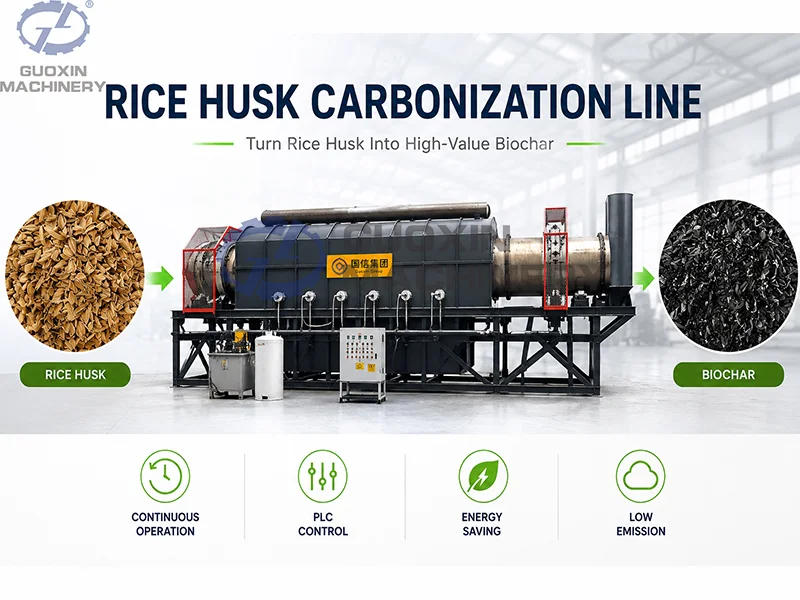
The core technology of large-scale biochar production equipment is the continuous anaerobic pyrolysis process. By subjecting biomass feedstock to high-temperature pyrolysis under sealed, low-oxygen conditions, organic components are decomposed to stably produce biochar and combustible syngas, making this equipment central to the low-carbon resource utilization of biomass.
Compatible Feedstocks
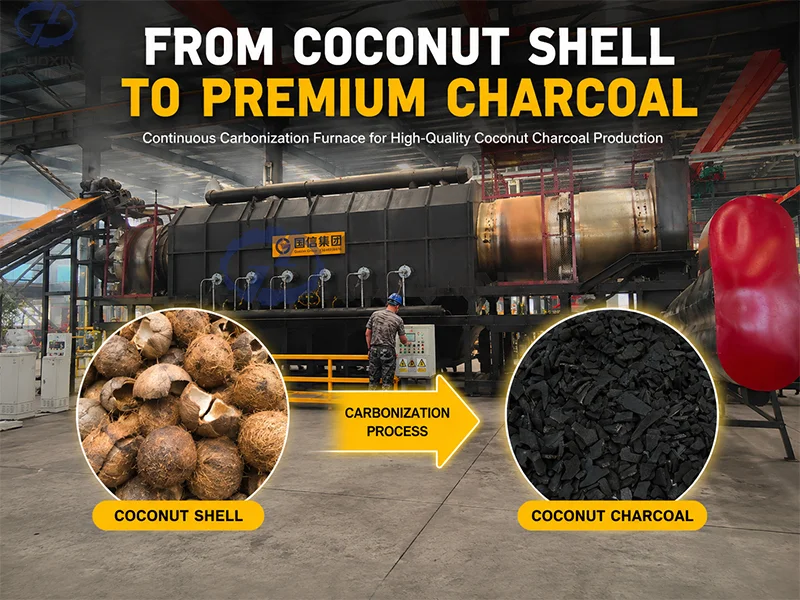
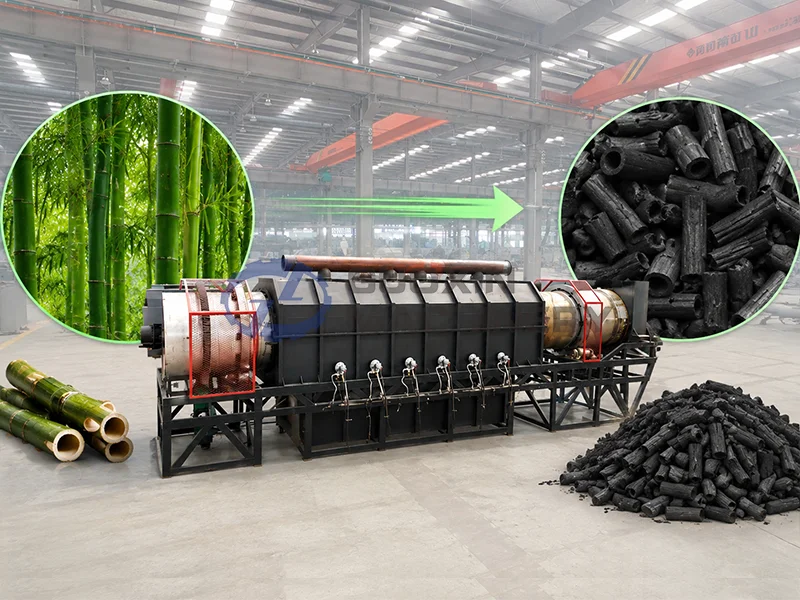
The equipment is compatible with a wide range of carbon-containing solid wastes. These include agricultural waste (such as straw, rice husks, corn cobs, and bagasse) and forestry residues (such as wood chips, bamboo materials, coconut shells, palm shells, fruit shells, and tree bark). It can also compliantly process special solid wastes such as municipal sludge, livestock and poultry manure, and refuse-derived fuel (RDF).
Core Equipment Structure and Functions
Sealed Feeding System: Utilizes a sealed conveying structure to ensure uniform feedstock input while isolating external air; this maintains a stable oxygen-free pyrolysis environment, prevents feedstock oxidation and combustion, and ensures the smooth operation of the pyrolysis process.
Feedstock Drying System: Precisely dries the feedstock to reduce moisture content to below 15%, effectively enhancing pyrolysis efficiency and the quality of the finished biochar.
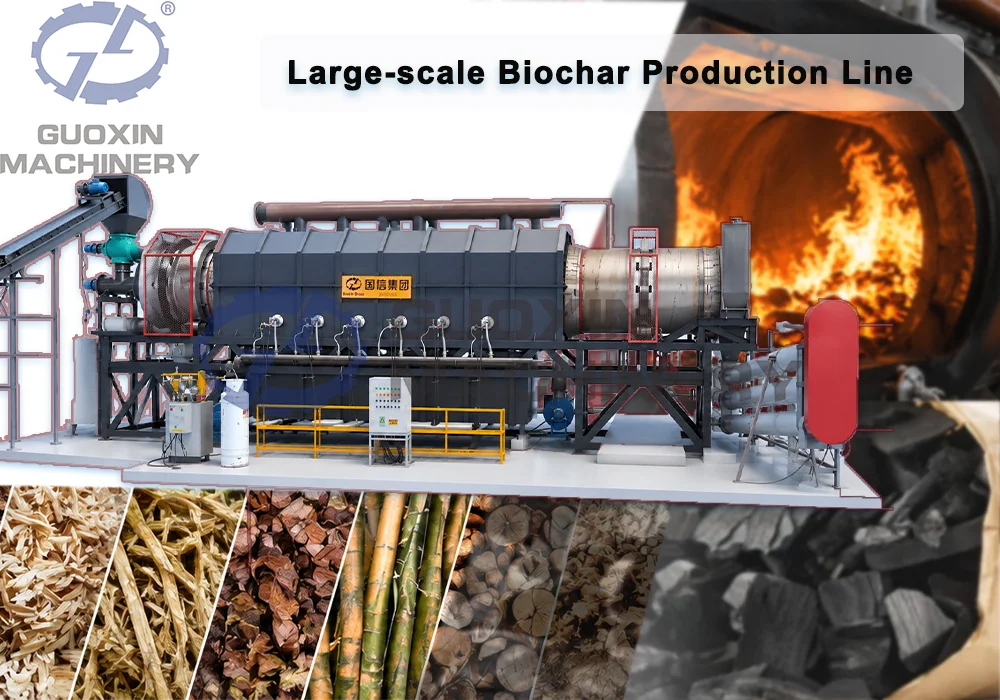
Continuous Carbonization System: Features a dual-layer reactor design where the inner layer handles material pyrolysis and carbonization, while the outer layer utilizes recovered combustible gas for heating. The furnace body incorporates thermal insulation to minimize heat loss; material is conveyed via the rotating furnace body, and zoned temperature control technology ensures uniform and stable carbonization.
Sealed Cooling and Discharge System: Employs a multi-stage spiral water-cooled discharge structure to rapidly cool high-temperature biochar in an air-isolated environment, eliminating the risk of spontaneous combustion and ensuring production safety.
Syngas Recovery and Purification System: Pyrolysis flue gas undergoes condensation to recover liquid by-products, while combustible syngas is dedusted, purified, and recycled as a heat source for the carbonization system, achieving energy self-sufficiency and high-efficiency utilization.
Tail Gas Purification System: Integrates multi-stage purification processes—including cyclone dust removal, spray scrubbing, and activated carbon adsorption—to thoroughly treat residual flue gas and ensure emissions meet regulatory standards.
Intelligent Control System: Equipped with a fully automatic PLC control system that monitors and dynamically adjusts key parameters such as feeding speed and pyrolysis temperature in real-time, enabling intelligent and automated equipment operation.
Value of Equipment Application
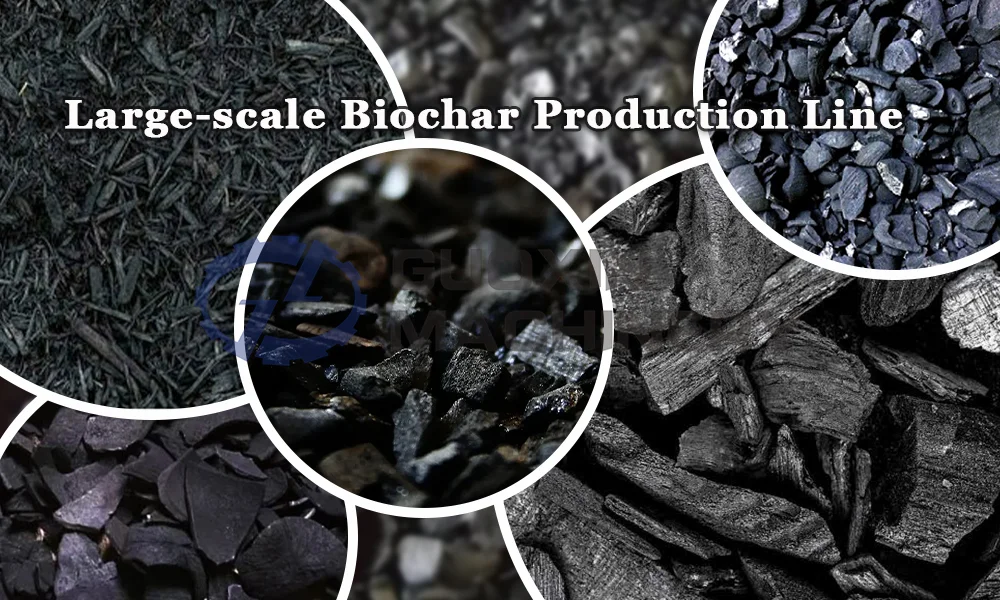
This equipment serves as a key vehicle for carbon sequestration, emission reduction, and the conversion of carbon assets; it effectively locks in biomass-derived carbon to achieve long-term sequestration. The resulting biochar can be utilized for soil improvement and ecological restoration, while also facilitating participation in carbon market trading. Furthermore, the equipment enables the resource recovery and treatment of various solid wastes, delivering combined environmental, economic, and social benefits.