
How to Coconut Shell as Charcoal?
Raw Material Preparation
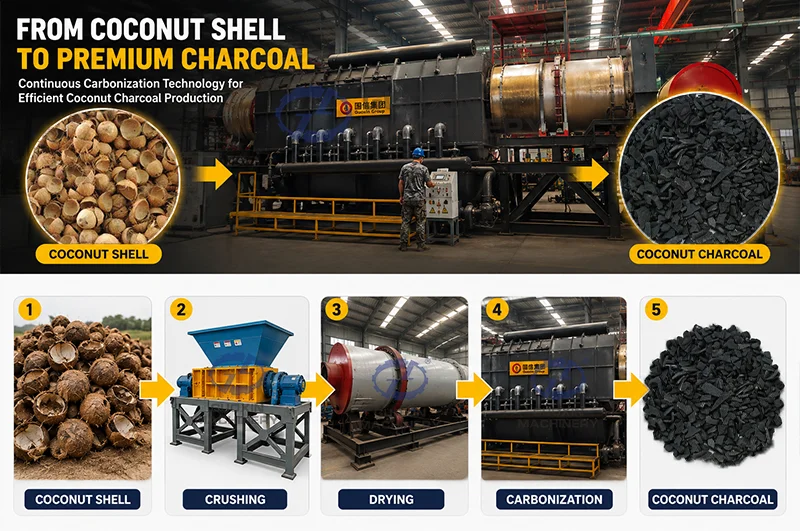
Coconut shells must undergo proper pretreatment before entering the carbonization system to improve carbonization efficiency and obtain high-quality charcoal.
Crushing
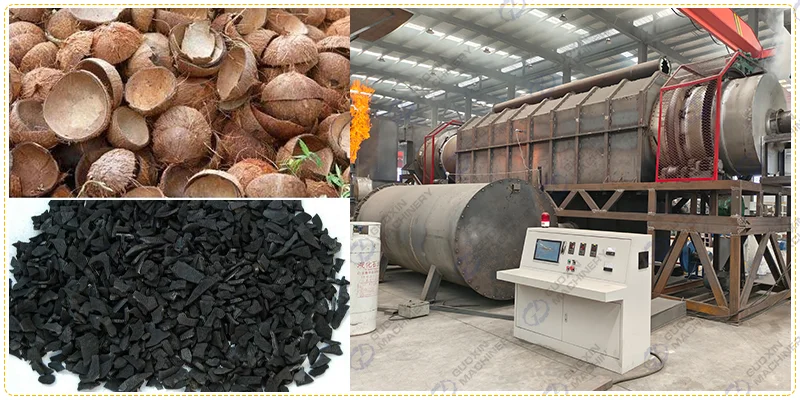
Coconut shells are crushed into uniform particles of approximately 10–20 mm to ensure even heating.
Drying
The crushed material is fed into a rotary dryer to reduce the moisture content to below 15%. Thorough drying not only improves thermal efficiency but also contributes to a higher charcoal yield.
Continuous Carbonization Process
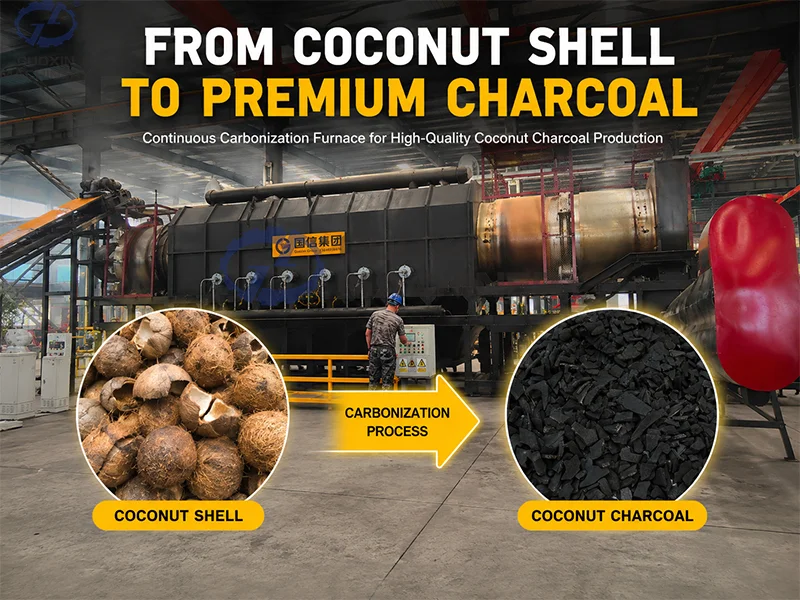
The dried coconut shells are fed into a continuous carbonization furnace. Inside the furnace, the material is heated at 400°C to 600°C in a low-oxygen environment. During this process, the coconut shells are converted into high-value, high-quality charcoal.
Cooling and Energy Recovery
After carbonization, the charcoal is rapidly cooled to prevent secondary combustion and ensure safe emissions. Simultaneously, the combustible gases generated during carbonization can be recycled as a heat source for the carbonization furnace and dryer.
Highly Efficient and Sustainable Charcoal Production
Modern continuous carbonization furnaces offer advantages such as stable operation, high output, energy saving, and environmental friendliness. By converting agricultural waste into valuable charcoal products, they provide an ideal solution for coconut processing plants and biomass recycling projects.
If you are planning a coconut shell charcoal production project, Guoxin Machinery can provide professional carbonization equipment and customized production solutions to help you maximize your return on investment.