Rice Husk Carbonizer – Conversion of Agricultural Waste into Biochar
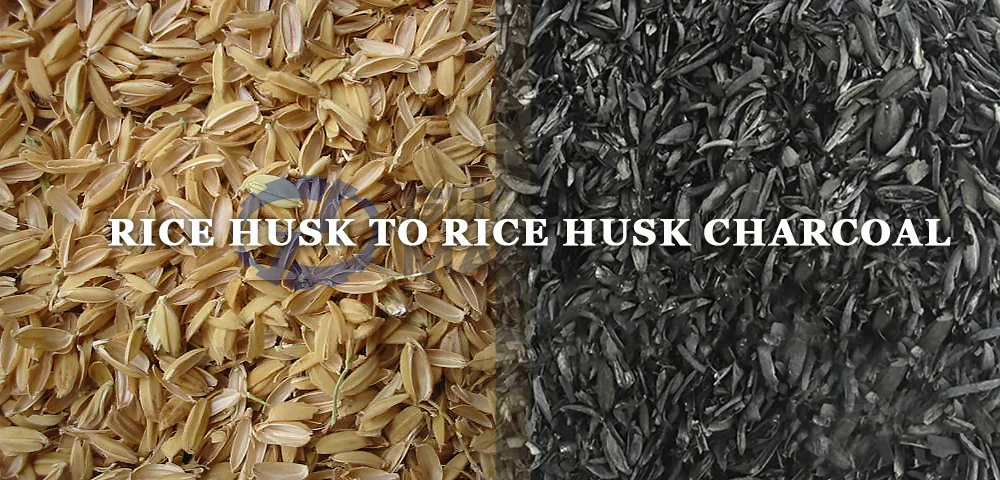
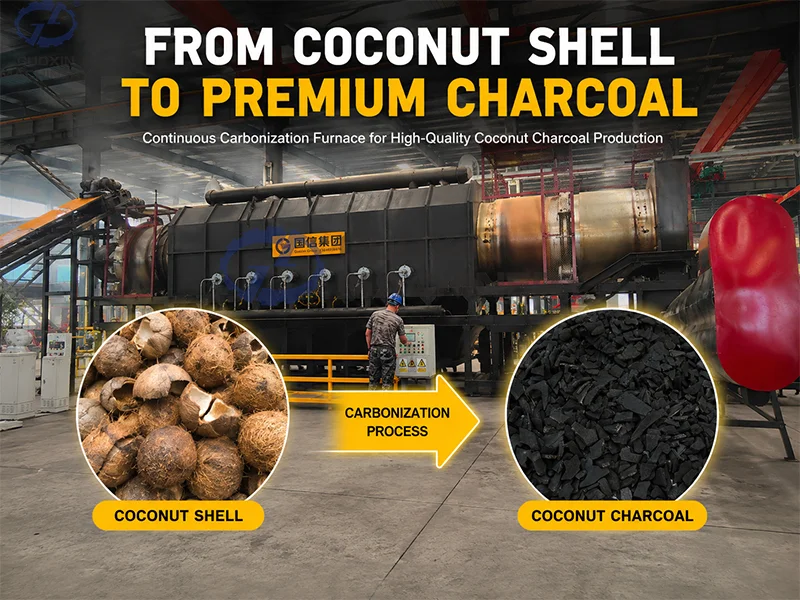
As the market demand for biochar continues to grow, rice husks—a common agricultural waste product—are increasingly becoming a vital raw material for biochar production. Utilizing specialized rice husk carbonization machines allows for the efficient conversion of waste husks into high-quality biochar, enabling resource recycling while generating significant economic value.
**Working Principle of Rice Husk Carbonization Machines**
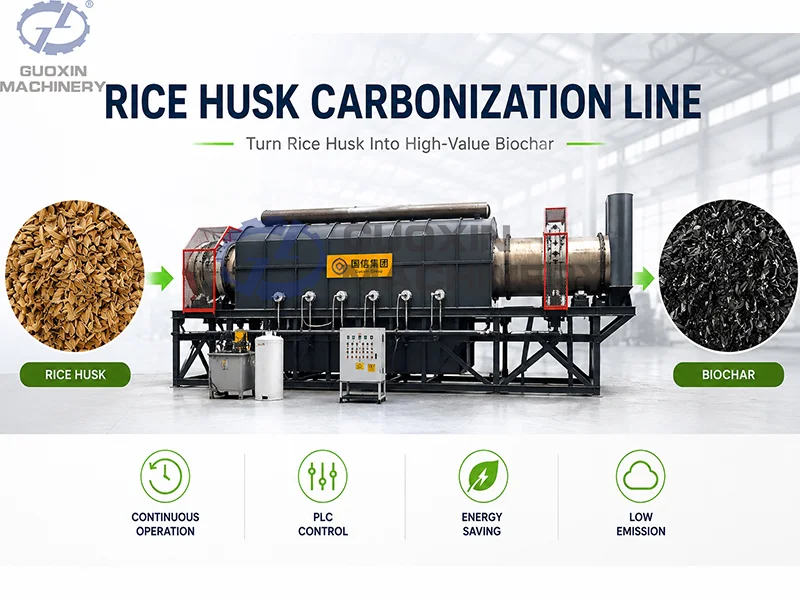
Rice husk carbonization machines employ high-temperature, low-oxygen pyrolysis technology. This process subjects the husks to dehydration, pyrolysis, and carbonization within a sealed environment, ultimately yielding biochar with a high fixed-carbon content. Combustible gases generated during pyrolysis are purified and recycled as a heat source, effectively reducing fuel consumption and enhancing energy efficiency.
**Rice Husk Carbonization Production Line Process**
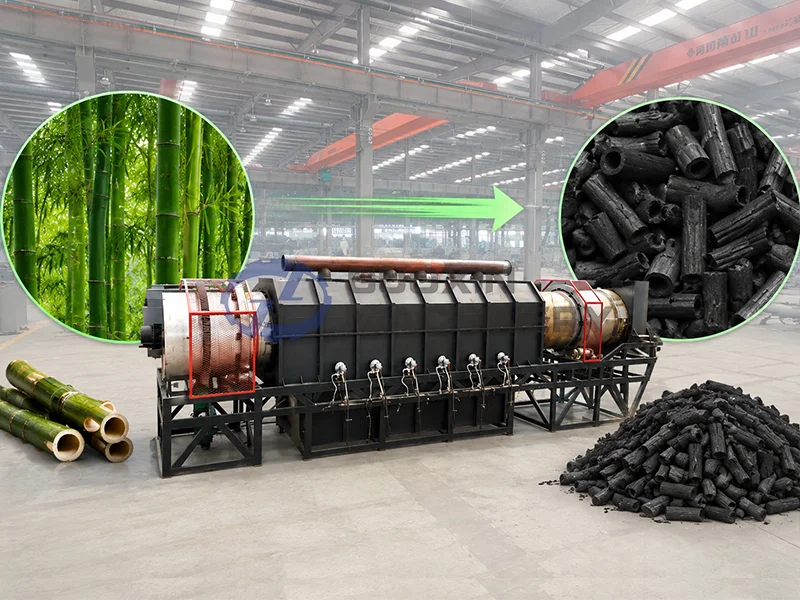
A complete rice husk carbonization production line comprises several key systems: raw material conveying, drying, carbonization, combustible gas recovery, finished product cooling, automatic discharge, and exhaust gas purification.
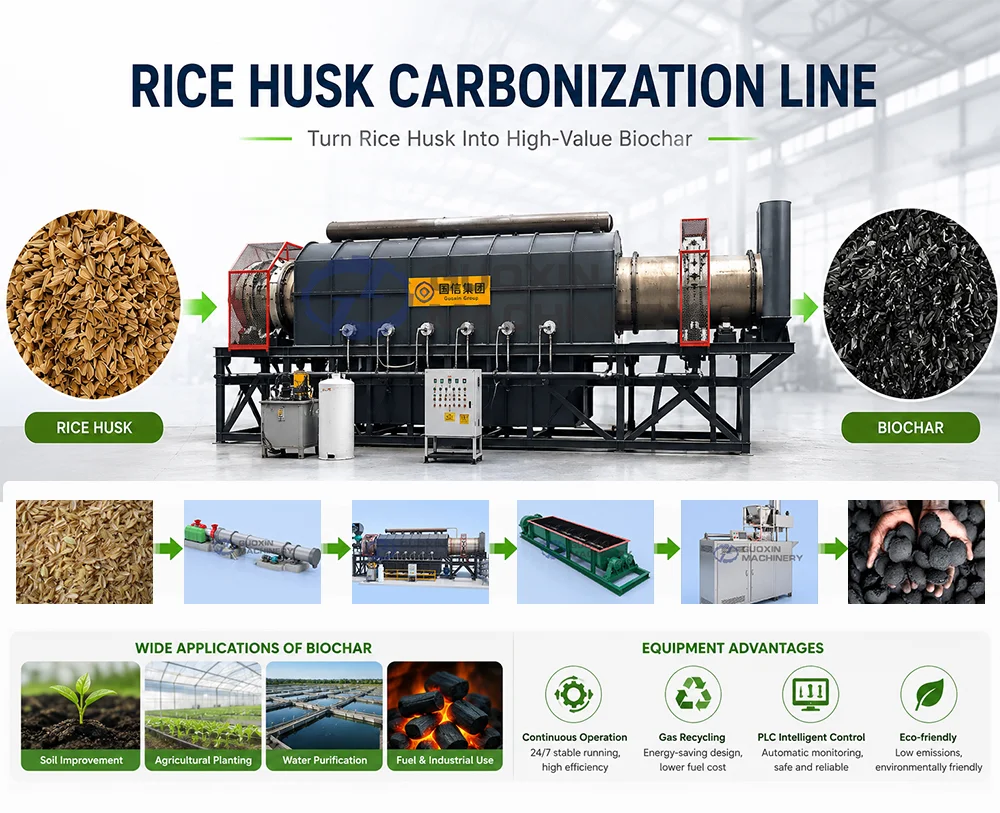
Upon entering the carbonization furnace, the rice husks first undergo moisture evaporation. As the temperature rises, they transition into the pyrolysis stage, ultimately forming high-quality biochar. The entire process operates continuously with automatic control, ensuring high production efficiency and consistent product quality.
**Advantages of Rice Husk Pyrolysis Machines**
Modern rice husk pyrolysis machines feature intelligent PLC control, enabling stable, continuous 24-hour production. They are characterized by high processing capacity, low energy consumption, and operational stability. Combustible gas recycling technology further reduces operating costs, while multi-stage exhaust purification ensures compliance with environmental emission standards.
**Wide-Ranging Applications of Biochar**
Biochar produced from rice husks has diverse applications, including soil amendment, horticulture, wastewater treatment, waste gas adsorption, and fuel use. It can also be further processed into high-value-added products such as machine-made charcoal and activated carbon, generating additional revenue for enterprises.
With the growth of green, low-carbon industries, efficient and eco-friendly rice husk carbonization production lines are becoming essential equipment for the resource utilization of agricultural waste, offering enterprises energy-saving and highly efficient solutions for biochar production.